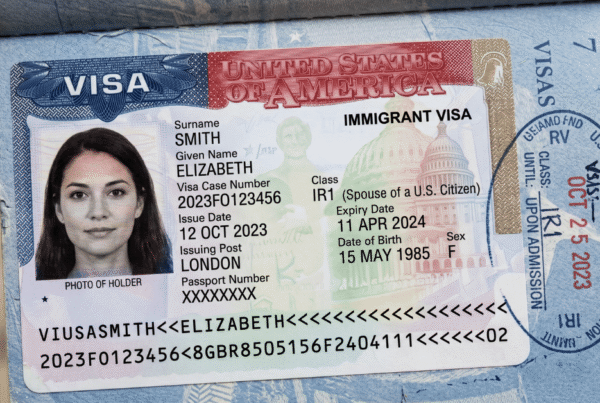
Securing permanent residence through employment means understanding what truly matters in the U.S. immigration framework. While several employment-based categories exist, many professionals lean toward the EB-2 NIW route because it removes the obligation for employer sponsorship and the standard labor certification process. Yet, moving forward without those two steps creates a higher responsibility to prove qualification. Nelson Immigration Law specializes in these employment pathways, offering guidance in representing individuals planning to file independently under this category. Whether someone seeks permanent residency or hopes to apply for U.S. citizenship in the future, Nelson Immigration Law can support that transition by phone at 626-683-3451.
Understanding EB-2 NIW visa requirements means recognizing how immigration officers evaluate evidence, professional achievement, and national importance. In contrast to employer-based filings, applicants carry the burden of proof. That burden becomes manageable when supported by strategic documentation, industry contributions, and consistent career progression. Many petitioners underestimate how thorough USCIS adjudication can be, particularly when presenting broad claims with little substance. This article titled EB-2 NIW Visa Requirements: A Business-Focused Breakdown for Professionals Seeking Permanent Residence focuses on transparent guidance, practical interpretation, and structured filing preparation.
Understanding EB-2 NIW Visa Requirements from a Practical Applicant Perspective
Before moving into procedural documents and qualification strategy, individuals should identify core eligibility. EB-2 stands for Employment-Based Second Preference—a class intended for individuals holding an advanced degree or those who demonstrate exceptional ability. National Interest Waiver (NIW) refers to the mechanism allowing individuals to bypass the job offer requirement if their contributions serve U.S. national objectives.
Applicants must prove:
- They meet EB-2 eligibility under advanced degree or exceptional ability
- Their proposed work offers substantial merit and national importance
- They are well-positioned to advance the proposed endeavor
- It benefits the U.S. national interest to waive job offer and labor certification requirements
Every element should be supported, not merely asserted. Officers prefer documented achievements, quantifiable results, credible third-party validation, and a consistent career narrative. Filing without coordination risks denial or delay. Nelson Immigration Law assists clients in producing compelling evidence, ensuring accuracy and strengthening the likelihood of approval.

EB-2 NIW Visa Requirements: Qualification Standards and Evidence Expectations
Many applicants assume advanced degrees guarantee EB-2 approval. That assumption rarely aligns with USCIS review outcomes. Official adjudicators expect more than academic credentials. They look for a pattern of accomplishment, industry relevance, and continued impact.
Individuals seeking NIW classification may qualify under:
- Advanced Degree
Professionals who hold a master’s degree or higher automatically meet one condition. Bachelor’s degree plus five years of post-baccalaureate progressive work experience may also satisfy the requirement. Supporting documents should include diplomas, transcripts, employment verification letters, and proof of progression in responsibility. - Exceptional Ability
Exceptional ability means competence exceeding that of ordinary professionals in the same field. Applicants must generally provide at least three types of evidence, such as:- Membership in associations requiring outstanding achievement
- Professional recognition from reputable industry sources
- Published work citing or referencing the applicant’s contributions
- Licensure or documented certifications
- Ten or more years of relevant work experience
- Proof of commanding a high salary relative to the field
Presenting evidence in an organized format improves adjudication efficiency. Officers should not be left searching for relevance. The filing package must explain why documentation matters and how it connects to national importance. Nelson Immigration Law has experience aligning evidence with regulatory criteria.
EB-2 NIW Visa Requirements: Establishing National Importance and Merit
This stage often creates the greatest challenge for self-petitioners. USCIS expects more than a well-written proposal. Applicants must demonstrate measurable benefit to the United States. Projects involving technology, science, economics, education, infrastructure, medical fields, national security, renewable energy, and advanced research often meet the standard when properly articulated.
To establish national importance, consider:
- Evidence showing scalable benefit to U.S. society or economy
- Documentation from institutions supporting the proposed endeavor
- Letters verifying critical industry needs
- Data highlighting skill shortages the applicant helps fill
- Proof that funding, grants, presentations, patents, or collaborations already exist
Claims must present probable future benefit, not theoretical potential. Strong petitions provide projections supported by current activity. Business plans, research publications, funding commitments, and expert testimony weigh heavily during adjudication.
Nelson Immigration Law supports petitioners in structuring arguments to demonstrate relevance, capability, and sustainability while maintaining professional tone and compliance.
USCIS Framework for “Well-Positioned” Evaluation
Being well-positioned means USCIS believes the applicant has the capacity to execute their proposed plan. It also means they can maintain that trajectory. Officers look for skill, knowledge, long-term planning, and proof of execution ability.
Evidence that supports this standard often includes:
- Employment history illustrating growth and leadership roles
- Documented accomplishments with measurable outcomes
- Patents, market expansion records, research implementation, or product commercialization
- Media coverage or peer-reviewed publication referencing work
- Expert recommendation letters validating track record and professional authority
Each letter should appear unique, fact-based, and independent. Repetitive language weakens credibility. Petitioners should avoid generic endorsements. Statements from recognized industry authorities carry weight when they focus on achievements and future capability.
Applicants can discuss plans to continue working in the United States, scaling operations, performing research, consulting, or collaborating with U.S. institutions. Concrete examples outperform broad intent statements.
Filing Structure That Highlights EB-2 NIW Visa Requirements Effectively
Petitioners file Form I-140 along with supporting evidence. After approval, applicants either adjust status from within the United States or process through a consulate abroad. Preparation should start well before submission. USCIS officers do not grant leniency when packages seem incomplete.
A strong submission often contains:
- Petition letter providing argument structure and explanation of regulatory qualification
- Evidence supporting advanced degree or exceptional ability
- Documentation establishing merit and national importance
- Proof demonstrating capacity to implement the proposed endeavor
- Recommendation letters aligned with evidence, not exaggerated summaries
- Work plan or professional roadmap demonstrating foreseeable U.S. benefit
- Organizational structure for supporting exhibits, index, and memoranda
Formatting consistency conveys professionalism. Clear paragraphs, short explanations, and direct references improve readability. Avoid narrative bloat. Officers reviewing hundreds of petitions respond well to clarity.
As Nelson Immigration Law assists petitioners, they emphasize structure as much as content, increasing the likelihood of approval.
Common Filing Mistakes That Delay EB-2 NIW Approvals
Applicants often misunderstand how evaluators think. Documentation proves impact. Assertions do not. Several avoidable mistakes appear frequently during adjudication.
Typical weaknesses include:
- Letters repeating general praise without measurable examples
- Research claims without peer-reviewed evidence or publication data
- Business plans without funding allocation or projected market growth numbers
- Overreliance on academic credentials without practical outcomes
- Minimal explanation of how work benefits national objectives
Submissions lacking objectivity limit approval chances. The strongest petitions remain evidence-centric.
Petitioners should review documentation, eliminating redundancy, reorganizing unclear statements, and verifying accuracy of dates and credentials. Legal representation mitigates risk if structured early in the planning stage.
When Applicants Transition from EB-2 NIW to Adjustment of Status
Once Form I-140 approval arrives, the next step depends on visa bulletin date availability. If current, an applicant living in the United States may file Form I-485 for adjustment of status. Otherwise, consular processing remains available to individuals residing abroad. Depending on circumstances, applicants may file employment authorization and advance parole applications concurrently.
Adjustment of status provides benefits such as work permission and the ability to remain lawfully pending decision. Family members often file derivative applications. Careful attention to document requests, biometric appointments, and interview scheduling matters. Nelson Immigration Law provides guidance if questions arise or documentation requests become complex.
Some individuals seek U.S. citizenship later. Nelson Immigration Law offers support through each stage of naturalization and work authorization proceedings.
EB-2 NIW Visa Requirements: How Entrepreneurs, Researchers, and Analysts Fit This Category
Entrepreneurs frequently pursue EB-2 NIW filings because they may not yet have U.S. employer sponsorship. Business planning becomes key. Evidence of funding, partnerships, technology development, projected job creation, or scalable product distribution helps.
Researchers rely on publications, citations, conference participation, grants, and peer endorsements. Data-driven fields often generate measurable results, easing the burden of proof.
Economic analysts contribute through market strategy, risk assessment, development finance, trade stabilization, and infrastructure analysis. When results support U.S. competitiveness or economic stability, USCIS recognizes those benefits.
Every profession must align national interest claims with documented evidence. The agency examines relevance, feasibility, and scale. Approvals reflect structure, proof, and consistency.
Practical Filing Tips for a Strong EB-2 NIW Case
Preparing an EB-2 NIW petition means balancing thorough documentation with strategic clarity. Applicants often benefit from planning evidence months in advance.
Practical steps include:
- Maintain a running portfolio of work achievements
- Track publication citations, awards, media coverage, and measurable results
- Request expert letters early to allow time for drafting and revision
- Build a structured explanation of national importance with supporting data
- Consult legal counsel if unsure how to align documentation with regulatory language
Consistency across all documents creates cohesion. Contradictions, unclear claims, or unsupported statements weaken the strongest profiles. Applicants should dedicate time to review every exhibit, ensuring logical organization and relevance.
For guidance creating a persuasive narrative, contact Nelson Immigration Law or schedule a consultation to discuss details at 626-683-3451.
FAQs About EB-2 NIW Visa Requirements
What makes the EB-2 NIW category different?
It eliminates the employer sponsorship and labor certification requirement, allowing qualified individuals to self-petition.
Is a PhD required for this category?
No. A master’s degree or exceptional ability may qualify.
How long does processing take?
Timelines vary. Applicants should track USCIS processing updates during submission.
Can entrepreneurs file under EB-2 NIW?
Yes, if they prove national benefit, demonstrated capability, and structured execution.
Do recommendation letters matter?
Yes. Letters confirming impact, innovation, and expertise strengthen evidence.
Final Thoughts — Making the Most of EB-2 NIW Visa Requirements
Professionals who meet EB-2 NIW visa requirements position themselves for long-term opportunities inside the United States. A strong filing depends on clarity, measurable success, and national value. Nelson Immigration Law works with petitioners seeking permanent residency and assists individuals preparing for future U.S. citizenship. Connect through our website or call 626-683-3451 for assistance with documents, strategy, and filing structure. When handled with precision, EB-2 NIW visa requirements become a stepping stone rather than a barrier, shaping careers, innovations, and industry expansion. For many applicants, working through EB-2 NIW visa requirements means moving one step closer to calling the United States home.